


Turkish Delight Prices 2026: What Sets the Price?
What determines Turkish delight prices? In short: not a single figure, but the lokum's kind, the type of nut inside it and the Antep pistachio ratio, the density of the filling, the coating, the packaging and the way it is sold. A plain classic lokum and a premium, whole-pistachio, chocolate-coated kind never cost the same: as ingredients and labor rise, so does the price. Rather than giving a current figure, this article focuses on the factors that set lokum prices in 2026 and on how to choose quality lokum for the money. As a lokum producer and exporter, Turkobaba offers more than 450 varieties; this variety also explains why there is no single "lokum price."
The factors that affect the price are below, starting with the most decisive. Once you grasp this logic, you can judge for yourself why any given lokum is priced as it is, and make an informed choice of the kind that best fits your budget.
The Main Factors That Set the Price of Lokum
The price of a lokum is made up of a few headings that build on one another. The most important is ingredients, followed by labor, packaging and sales channel.
- Kind: plain classic, filled rolled, or chocolate-coated double? The more "premium" the kind, the more both the ingredients and the labor rise.
- Type of nut and Antep pistachio ratio: pistachio is one of the most valuable ingredients in lokum. The pistachio ratio and how it is processed (ground, slivered, whole) are the biggest determinant of the price.
- Density of the filling: single-layer rolled, or two-layer filled (double)? As the filling grows, so do the ingredients and the richness, and therefore the cost.
- Coating: a chocolate coating means extra ingredients and labor; it raises the cost over a plain kind.
- Packaging: bulk (loose) sale, or a branded box/pack? Packaging and presentation costs pass to the unit price.
- Way of selling: wholesale or retail? As quantity rises, the unit cost falls.
- Season and ingredient cost: the current market price of pistachio, sugar and other inputs affects the cost of all kinds from period to period.
Kind and Antep Pistachio Ratio: The Biggest Factor
The real source of the price difference is the kind and the nut inside it. Under the same name "lokum," there are three typical tiers whose prices clearly diverge:
- Economical base: nut-free, plain kinds like plain classic lokum are usually the most affordable group; their ingredients are simple, the labor is low and they offer a long shelf life.
- Mid segment: classic filled kinds like rolled lokum with pistachio filling; because pistachio goes in, they sit above the plain kind and below the premium line.
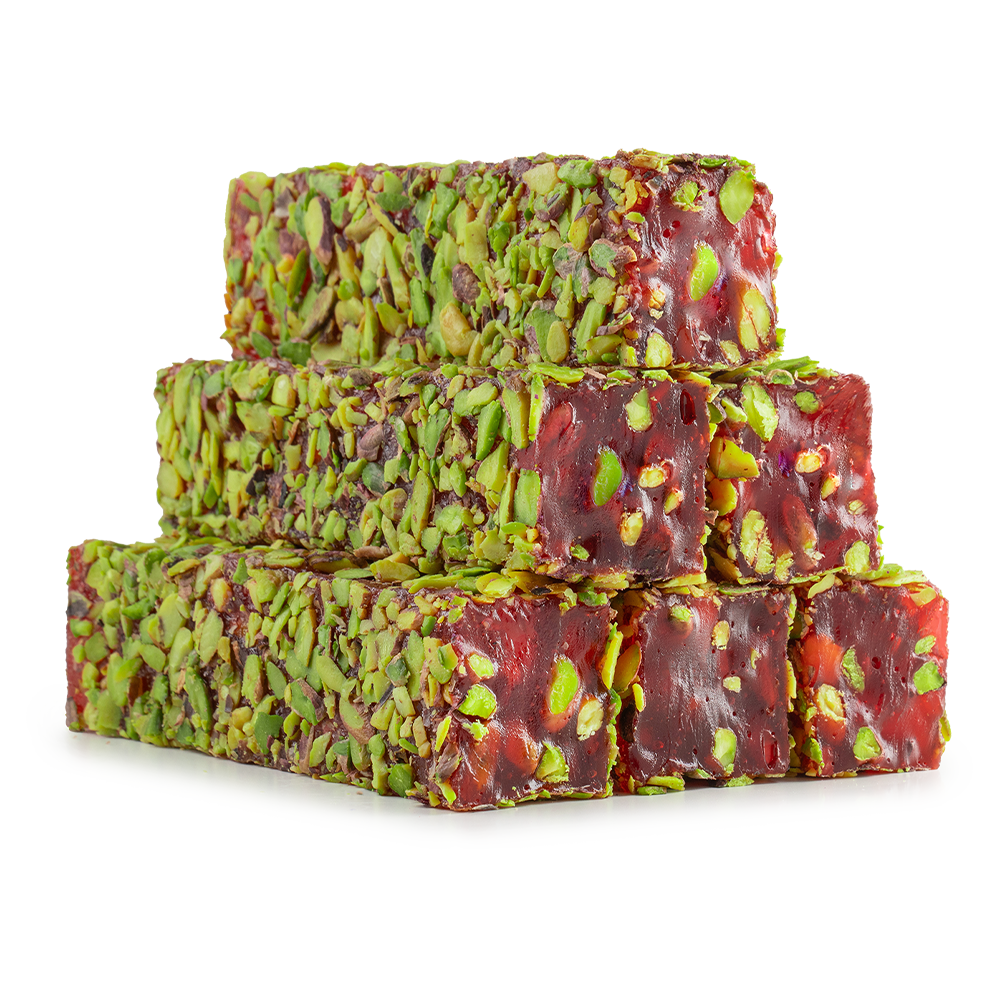
- Premium line: slivered-pistachio cut wick lokum and whole-pistachio, chocolate-coated or double kinds; the most intense ingredients and labor are in this group.
How the pistachio is processed also changes the price: ground pistachio is the most economical, slivered pistachio mid-range, and whole pistachio the costliest use. You can find the distinction between these three axes in detail in our guide to types of lokum.
Loose (Bulk) Lokum or Packed Lokum?
The same lokum can carry a different unit price depending on how it is sold. The difference between loose and packed lokum is mostly not in the product itself, but in the packaging and presentation.
| Criterion | Loose (bulk) lokum | Packed lokum |
|---|---|---|
| Unit price | Usually more affordable | A little higher due to packaging/presentation |
| Packaging cost | Low or none | Includes box, label, branding |
| Best use | Home use, large-scale serving | Gifting, shelf, hygienic transport |
| Shelf life / protection | Can be affected by moisture when loose | Sealed packaging protects it |
So if you are going to eat the lokum at home or serve it in large amounts, loose lokum makes sense for the cost; for gifting or a sales shelf, packed lokum offers an advantage in presentation and protection. The price difference comes not from the quality of the product but mostly from this packaging choice.
Wholesale or Retail? The Effect of Quantity on Price
Another important factor affecting lokum prices is the purchase quantity. In wholesale, lokum is supplied in large packs, so the packaging, handling and logistics burden per unit falls; this lowers the cost per kilo compared with retail. At Turkobaba most products are offered in 5 kg packs, and this standard format makes both stock tracking and cost planning easier for shops, delicatessens, cafés, hotels and dealers.
The wholesale advantage is not limited to unit price: a fixed pack size simplifies counting and reordering, makes balancing the range easier, and keeps operations simpler for regular supply. We explain the bulk-buying process step by step for businesses in our piece on buying lokum wholesale.
The Effect of Labor and Production Method on Price
As much as the ingredients, how the lokum is made also sets the price. Kinds where whole pistachios are placed by hand, where the filling is wrapped one by one or where the chocolate is coated with care require more labor; this labor naturally passes to the cost. Multi-step forms like rolled and double need a more intensive production process than plain kinds cut from a single dough. Likewise, processes such as coating, wick-drawing and special cutting move the product into a more "premium" position while also raising the unit cost.
For this reason, comparing the price of two products by the kilogram alone can be misleading: of two lokums of the same weight, one may be plain dough and the other whole-pistachio and chocolate-coated. Thinking about the content of the kind and the production labor together, when judging the price, lets you see the difference between "expensive" and "valuable."
The Role of Season and Ingredient Cost
Lokum is a product that rests on agricultural ingredients. The market price of inputs like Antep pistachio, sugar and starch changes from period to period with the harvest, the season and general cost conditions. So even the price of the same kind may not stay fixed over time. Fluctuation in pistachio prices in particular directly affects the cost of pistachio kinds. This is also what explains why no fixed figure is given in this article: a realistic, current price is set only by the conditions at the moment of purchase.
How to Choose Quality Lokum for the Money
"Cheap" and "good value" are not the same thing. The goal is to buy a quality lokum that is worth what you pay, at a reasonable price. A few practical principles help you strike that balance:
- Choose the kind by need: economical plain or ground-pistachio kinds for everyday eating; whole-pistachio or chocolate-coated premium kinds for gifting. The right kind is the first step to avoiding needless cost.
- Tie the loose-vs-packed decision to the purpose: loose lokum is more efficient for home and large-scale serving, packed lokum for gifting and the shelf.
- Consider wholesale for bulk needs: for regular or high-volume consumption, the 5 kg pack format lowers the unit cost.
- Check quality by eye: the vivid green color of the pistachio, a full but non-crumbling texture and a fresh production date show you are getting your money's worth. You can find practical ways to tell quality in our piece on how to tell quality lokum.
- Confirm the current price directly: once the kind, packaging and quantity are settled, the current price is obtained from the relevant product page or through contact.
In the end, the price of lokum is the sum of decisions about kind, pistachio ratio, filling, coating, packaging and quantity. When you make these decisions by your need, you can choose something that both fits your budget and does not compromise on quality.
Frequently Asked Questions
What makes Turkish delight prices vary?
Lokum prices vary by the kind, the type of nut used and the Antep pistachio ratio, the density of the filling, the coating, the packaging and the way it is sold (loose or packed). A plain classic lokum and a premium whole-Antep-pistachio kind do not cost the same; as ingredients and labor rise, so does the price.
Is loose lokum or packed lokum better value?
Loose (bulk) lokum is usually cheaper per unit because it carries no packaging and branding cost; it suits home use and large-scale serving. Packed lokum offers gift presentation, shelf life and hygienic transport, so its unit price can be a little higher. The right choice depends on where you will use the lokum.
Does buying lokum wholesale give a price advantage?
Yes. In wholesale, lokum is supplied in large packs, so the packaging, handling and logistics burden per unit falls; this lowers the cost per kilo compared with retail. At Turkobaba most products are offered in 5 kg packs, and this format makes cost planning easier for shops, cafés, hotels and dealers.
Why is Antep pistachio lokum more expensive?
Antep pistachio is one of the most valuable and costliest ingredients in lokum. As the pistachio ratio in a lokum rises, and as the pistachio is used slivered or whole rather than ground, the ingredient cost goes up; this passes straight to the price. Plain classic kinds are for this reason usually the most economical group.
Where can I find the current lokum price?
Because lokum prices change by kind, packaging, order quantity and current ingredient costs, no fixed figure is given in this article. For a current and exact price, you can look at the relevant product page or get in touch with Turkobaba.